-
Date: 2026-07-31
-
Time: 8:00AM-5:00PM
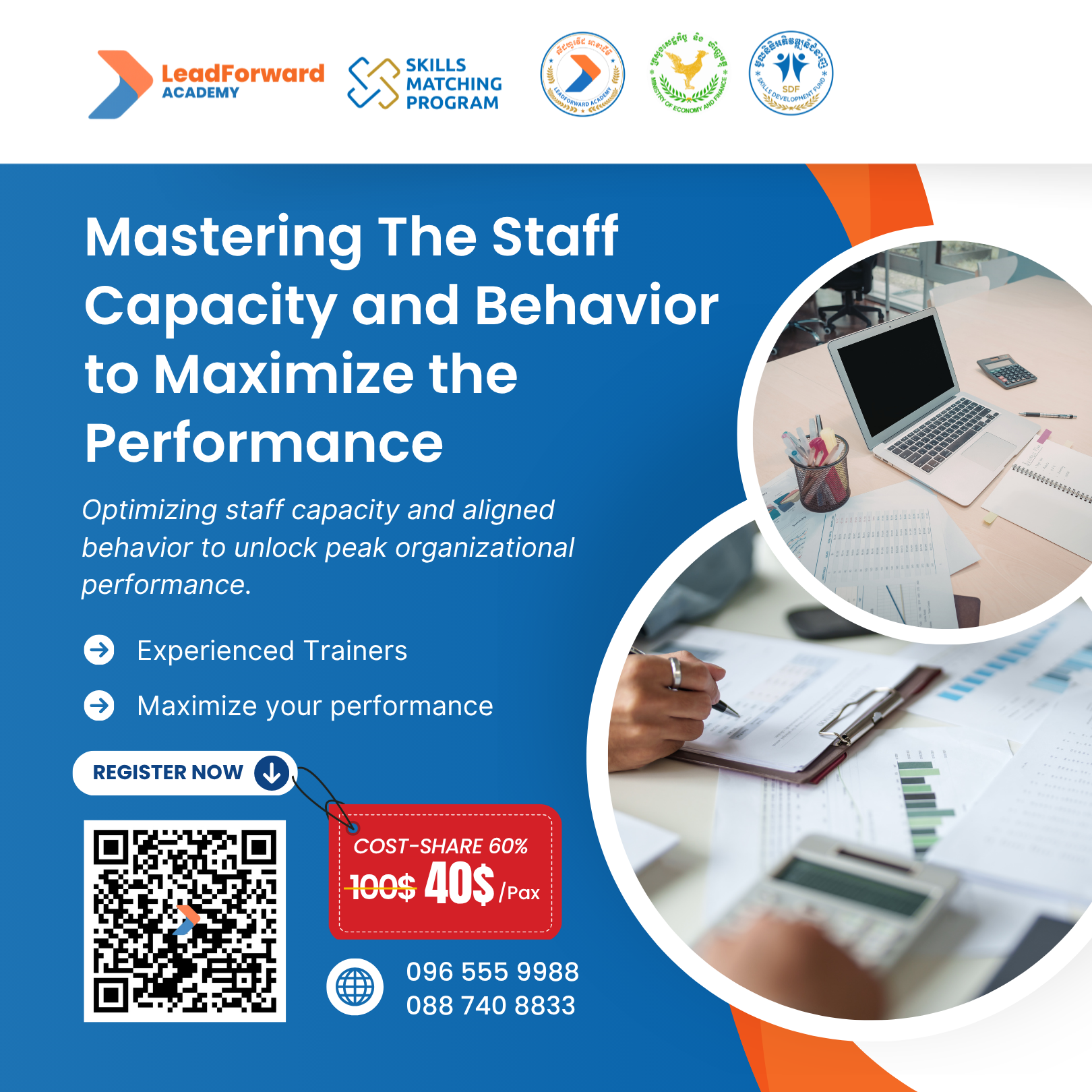
Understand the difference between leadership and management and their practical application.
Identify staff typologies using frameworks such as Potential vs Performance, Results vs Attitude, and Competency vs Commitment.
Apply situational leadership and appropriate communication styles to match staff needs.
Assess staff development needs using the Will vs Skill Matrix.
Learn and practice coaching techniques for improving behavior and performance through the Hamburger Coaching System.
Develop emotional intelligence skills, including self-awareness, empathy, and influence, to enhance team engagement.
Create a practical 30-day action plan to implement learned leadership tools in the workplace.
By the end of this workshop, participants will be able to:
Distinguish between leadership and management and apply each appropriately in real work situations.
Recognize different staff types and understand how to manage them effectively using relevant frameworks.
Adapt leadership and communication styles to meet the needs and development levels of team members.
Evaluate staff motivation and competence using the Will vs Skill Matrix to guide development actions.
Coach team members to improve performance and behavior using the Hamburger Coaching System.
Demonstrate enhanced emotional intelligence, including self-awareness, empathy, and influence, in team interactions.
Develop and commit to a 30-day action plan for applying leadership and coaching tools in the workplace.
Training Contents
Module 1: Understanding Staff Capacity and Workplace Behavior (Theory)
Duration: 1.5 Hours
Definition of staff capacity and workplace behavior
Factors affecting employee performance
Relationship between skills, attitude, and performance
Manager’s role in capacity and behavior management
Module 2: Identifying Strengths, Gaps, and Performance Barriers (Theory + Practice)
Duration: 2 Hours
Theory:
Competency frameworks and performance indicators
Identifying skill gaps and behavioral challenges
Performance barriers at individual and team levels
Practice:
Staff capacity assessment exercise
Group discussion on common performance challenges
Module 3: Motivating Staff and Shaping Positive Behavior (Theory + Practice)
Duration: 2 Hours
Theory:
Motivation theories and practical application
Behavioral influence and leadership styles
Creating a positive and accountable work culture
Practice:
Role-play: motivating different staff profiles
Group activity: behavior improvement strategies
Module 4: Coaching, Feedback, and Performance Management (Theory + Practice)
Duration: 1.5 Hours
Theory:
Coaching vs supervision
Effective feedback techniques
Performance monitoring and evaluation
Practice:
Coaching conversation role-play
Feedback practice using real scenarios
Module 5: Managing Difficult Behavior and Conflict (Theory + Practice)
Duration: 1.5 Hours
Theory:
Types of difficult behavior in the workplace
Causes of conflict and underperformance
Constructive behavior correction techniques
Practice:
Case study: handling poor performance
Conflict management role-play
Module 6: Action Planning and Performance Optimization (Practice)
Duration: 0.5 Hour
Review of key learning points
Development of individual or team performance action plans
Group sharing and feedback
This training is designed for:
Managers and department heads
Supervisors and team leaders
Human Resource (HR) personnel
Line managers and project leaders
Business owners responsible for staff performance
Emerging leaders preparing for supervisory roles
Theory (4.00 hours) Practice (4.00 hours)
Participants should be supervisors, team leaders, or managers
Basic experience managing or working with staff
Ability to communicate in English
Willingness to participate in discussions and role-plays
No prior formal management training required
© 2026 LeadForward Academy. All rights reserved.