
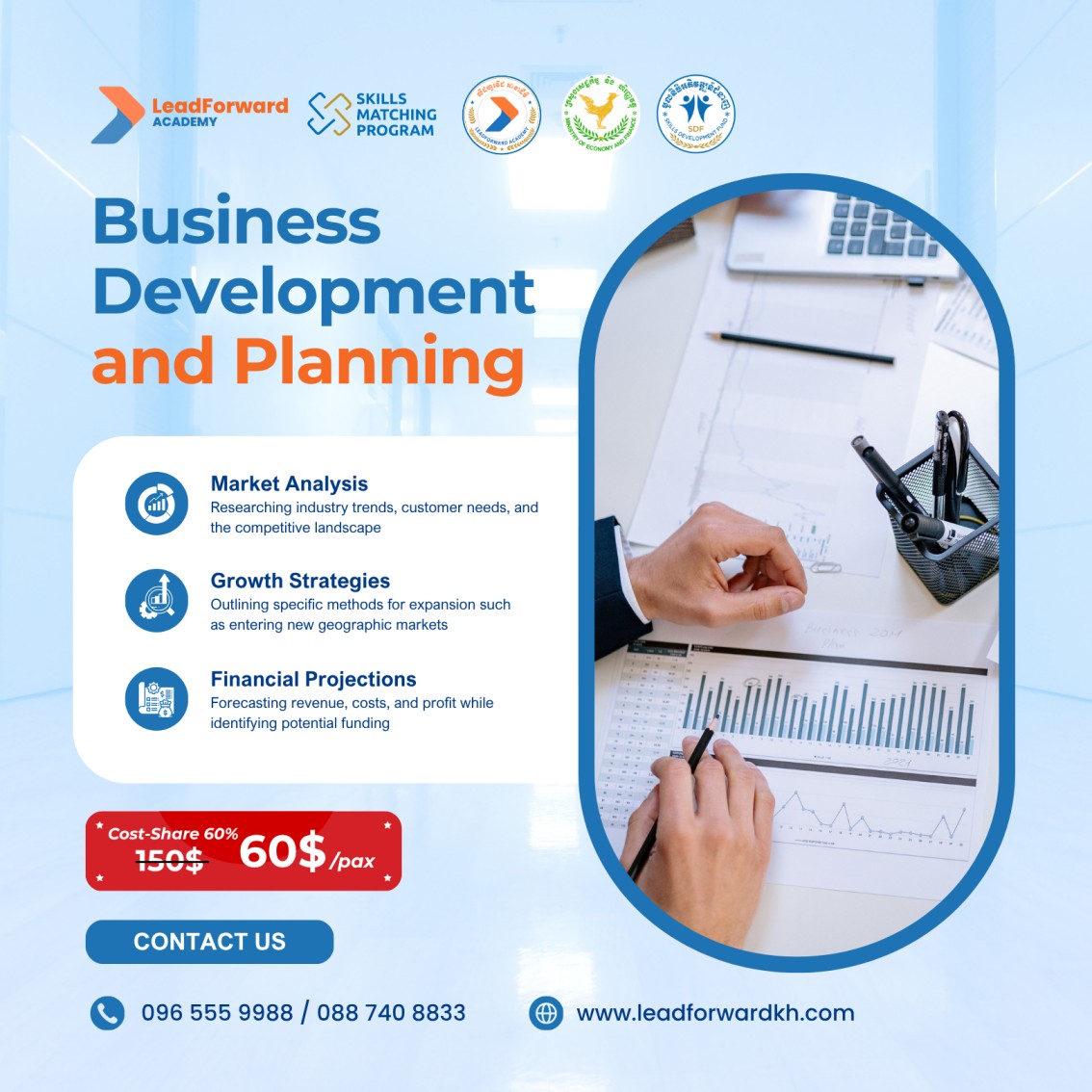
Objective
Analyze internal and external business environments
Identify growth opportunities and risks
Develop clear business strategies and action plans
Translate analysis into realistic business development plans
Monitor performance and adjust plans effectively
Learning Outcome
Explain the role of business development in driving organizational growth and competitiveness.
Analyze internal and external business environments using practical tools such as SWOT and PESTEL.
Identify market opportunities and potential risks based on customer, market, and competitor analysis.
Develop clear business development strategies aligned with company objectives and market conditions.
Create structured business development plans including objectives, action steps, timelines, and resources.
Set realistic targets and key performance indicators (KPIs) to measure business performance.
Apply financial and non-financial thinking when evaluating business development initiatives.
Assess risks and propose mitigation strategies to support sustainable business growth.
Present and justify business development plans with confidence to management or stakeholders.
Implement practical actions that contribute directly to business growth in their respective roles.
Course Content
DAY 1: BUSINESS ANALYSIS & OPPORTUNITY IDENTIFICATION
Day 1 Learning Objectives
Participants will:
Understand business development concepts
Conduct market, customer, and competitor analysis
Use analytical tools to identify opportunities
Build a strong foundation for planning
Session 1: Introduction to Business Development
⏱ 1 hour
Topics Covered
What is Business Development?
Difference between:
Business Development vs Sales vs Marketing
Role of Business Development in Company Growth
Business Development lifecycle
Activity
Group discussion: “What does business development mean in your role?”
Session 2: Understanding the Business Environment
⏱ 1.5 hours
Topics Covered
Industry overview and trends
Market dynamics & customer behavior
Internal vs external environment
PESTEL Analysis (Political, Economic, Social, Technological, Environmental, Legal)
Activity
Group exercise: PESTEL analysis of participants’ industry
Session 3: Market & Customer Analysis
⏱ 1.5 hours
Topics Covered
Market segmentation (B2B / B2C)
Customer needs, pain points & buying behavior
Value proposition development
Customer journey basics
Activity
Identify key customer segments & value propositions
Session 4: Competitor & Industry Analysis
⏱ 1.5 hours
Topics Covered
Identifying direct & indirect competitors
Competitive positioning
Porter’s Five Forces (simplified)
Competitive advantages & differentiation
Activity
Competitor comparison matrix
Session 5: Business Analysis Tools
⏱ 1.5 hours
Topics Covered
SWOT Analysis
Financial & non-financial indicators
Opportunity vs risk assessment
Turning data into insights
Activity
Group SWOT analysis using a case study
Day 1 Wrap-Up
⏱ 30 minutes
Key learnings recap
Link between analysis and planning
Preview of Day 2
DAY 2: BUSINESS DEVELOPMENT STRATEGY & PLANNING
Day 2 Learning Objectives
Participants will:
Develop business development strategies
Create structured business plans
Set targets, KPIs, and action steps
Manage risks and execution
Session 6: Business Strategy & Growth Options
⏱ 1.5 hours
Topics Covered
Business growth strategies:
Market penetration
Market development
Product/service development
Partnerships & alliances
Strategic prioritization
Activity
Strategy selection exercise (group work)
Session 7: Business Development Planning Framework
⏱ 1.5 hours
Topics Covered
Components of a business development plan:
Objectives
Strategies
Action plans
Resources
Timeline
SMART goal setting
Activity
Draft business objectives & strategies
Session 8: Action Planning & Execution
⏱ 1.5 hours
Topics Covered
Turning strategy into action
Roles & responsibilities
Resource allocation
Timeline & milestones
Activity
Create a simple action plan template
Session 9: Financial Thinking & Performance Tracking
⏱ 1.5 hours
Topics Covered
Revenue vs profit mindset
Key business KPIs
Monitoring progress & performance
Adjusting plans when the market changes
Activity
KPI selection & performance tracking exercise
Session 10: Risk Management & Sustainability
⏱ 1 hour
Topics Covered
Identifying business risks
Risk mitigation strategies
Scenario planning
Building sustainable growth
Activity
Risk identification & mitigation mapping
Final Session: Presentation & Commitment
⏱ 1 hour
Activities
Group presentation of business development plans
Trainer feedback
Individual action commitment
Who is it for?
Business Managers
Sales & Marketing Leaders
Commercial & Operation Supervisors
Entrepreneurs / Business Unit Heads
Training Method
Theory (6.50 hours) Practice (9.50 hours)
Minimum Entry Requirements
Basic understanding of business operations, sales, marketing, or management
Currently working in or preparing for roles related to:
Business development
Sales & marketing
Operations or management
Willingness to participate in discussions, group activities, and exercises
Ability to read and understand basic business terminology (English or bilingual support as agreed)
Newest Courses

© 2026 LeadForward Academy. All rights reserved.