
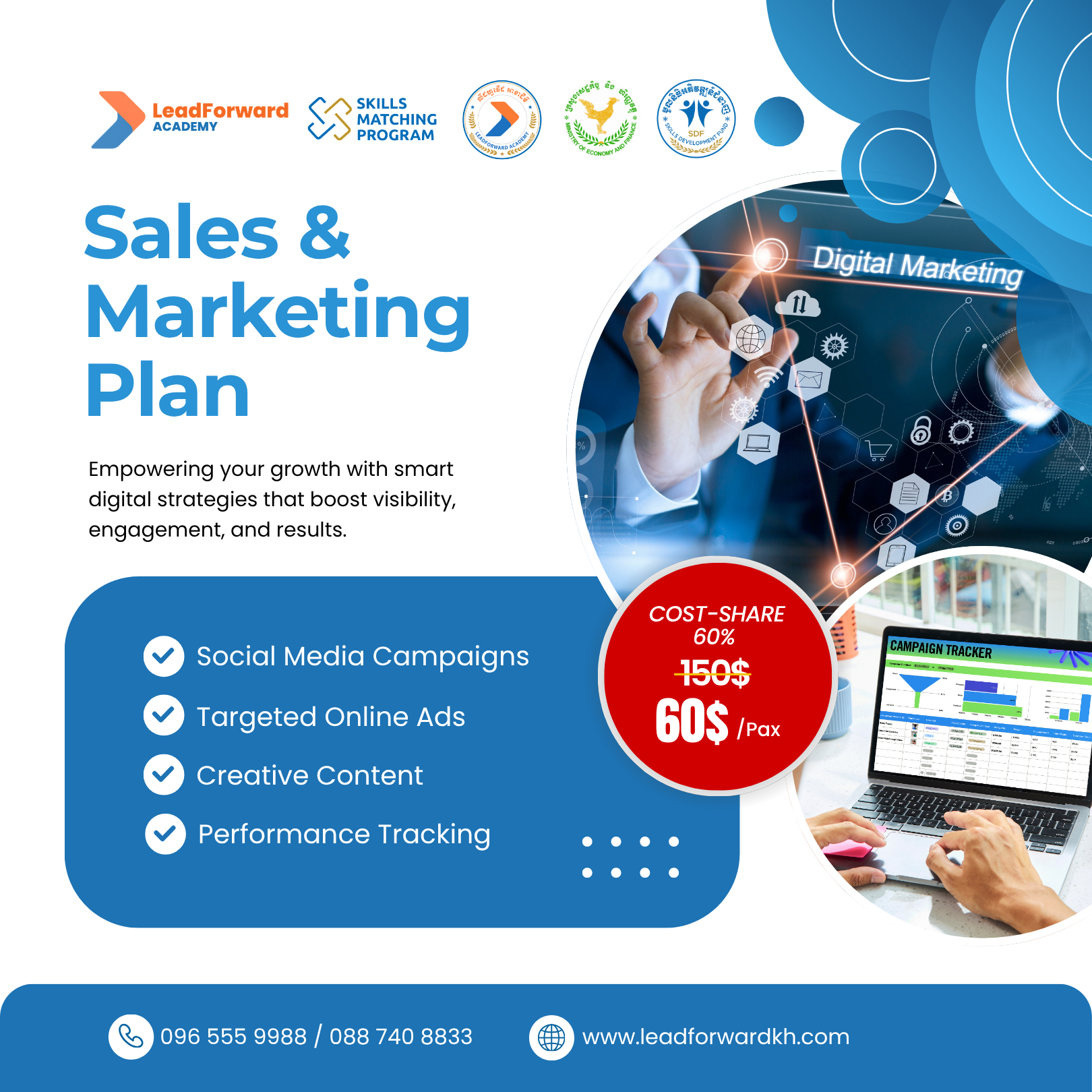
Objective
Understand the role of a structured sales and marketing plan in business growth
Apply the 7Ps Marketing Mix to analyze and improve current offerings
Develop a customer-focused marketing strategy
Align marketing activities with sales objectives
Create a practical and measurable sales and marketing action plan
Adapt the 7Ps framework to different industries and business models
Learning Outcome
Design a structured sales and marketing plan using the 7Ps framework
Analyze and improve existing marketing strategies
Align sales activities with marketing initiatives
Apply customer-centric thinking in planning
Develop practical action plans with measurable results
Adapt the 7Ps model to their own industry and organization
Course Content
Day 1: Foundations of Sales & Marketing Planning and the First 4Ps
Module 1: Introduction to Sales and Marketing Planning
Difference between Sales Plan vs Marketing Plan
Why many marketing plans fail
Linking business goals to sales & marketing objectives
Overview of strategic vs tactical planning
Role of the Marketing Mix (7Ps)
Module 2: Understanding Customers and Market Context
Market segmentation (B2C & B2B)
Target market selection
Customer needs, pain points, and buying behavior
Value proposition and positioning
Module 3: Product (P1) – What Are We Really Selling?
Product vs service concepts
Core, actual, and augmented product
Product life cycle and implications for sales
Branding and differentiation
Managing product portfolios
Module 4: Price (P2) – Pricing Strategies for Profitability
Pricing objectives and constraints
Cost-based, value-based, and competition-based pricing
Psychological pricing
Discounts, promotions, and pricing for sales teams
Pricing alignment with brand positioning
Module 5: Place (P3) – Distribution and Sales Channels
Direct vs indirect channels
Online and offline distribution models
Channel partner management
Coverage, availability, and convenience
Role of sales force in channel execution
Module 6: Promotion (P4) – Driving Awareness and Demand
Integrated marketing communication (IMC)
Advertising, PR, digital marketing, and sales promotion
Personal selling and relationship marketing
Promotional planning aligned with sales targets
Budgeting and measuring promotion effectiveness
Day 2: The Service-Oriented Ps and Building the Sales & Marketing Plan
Module 7: People (P5) – The Human Element in Sales & Marketing
Role of salespeople and frontline staff
Internal marketing and employee engagement
Skills, attitude, and service mindset
Aligning sales behavior with brand promise
Module 8: Process (P6) – Delivering Consistent Customer Experience
Sales and service process mapping
Customer journey and touchpoints
Lead generation to closing process
Handling complaints and service recovery
Improving efficiency and consistency
Module 9: Physical Evidence (P7) – Making the Intangible Tangible
Importance of physical cues in services
Store layout, office environment, and packaging
Digital presence (website, social media, apps)
Marketing materials and brand consistency
Module 10: Integrating the 7Ps into a Sales & Marketing Plan
Aligning all 7Ps into one coherent strategy
Prioritizing initiatives
Setting SMART sales and marketing objectives
Action plans, timelines, and responsibilities
Module 11: Sales and Marketing Budgeting & KPIs
Budget allocation across the 7Ps
Sales forecasts and targets
Key marketing and sales performance indicators
Monitoring and evaluation methods
Module 12: Practical Workshop & Case Study
Group work: Developing a Sales & Marketing Plan using 7Ps
Industry-neutral case studies
Presentation and feedback
Key lessons and best practices
Who is it for?
Business and Enterprise Owners
Sales & Marketing Managers
Business Development Professionals
Marketing Officers and Coordinators
Sales Supervisors and Managers
Entrepreneurs and Business Owners
Product and Brand Managers
Anyone involved in planning or executing sales and marketing activities
Training Method
Theory (6.50 hours) Practice (9.50 hours)
Minimum Entry Requirements
Basic understanding of business operations
Experience or involvement in sales, marketing, or business planning (preferred but not mandatory)
Willingness to participate in discussions and group activities
No technical or industry-specific knowledge required
© 2026 LeadForward Academy. All rights reserved.